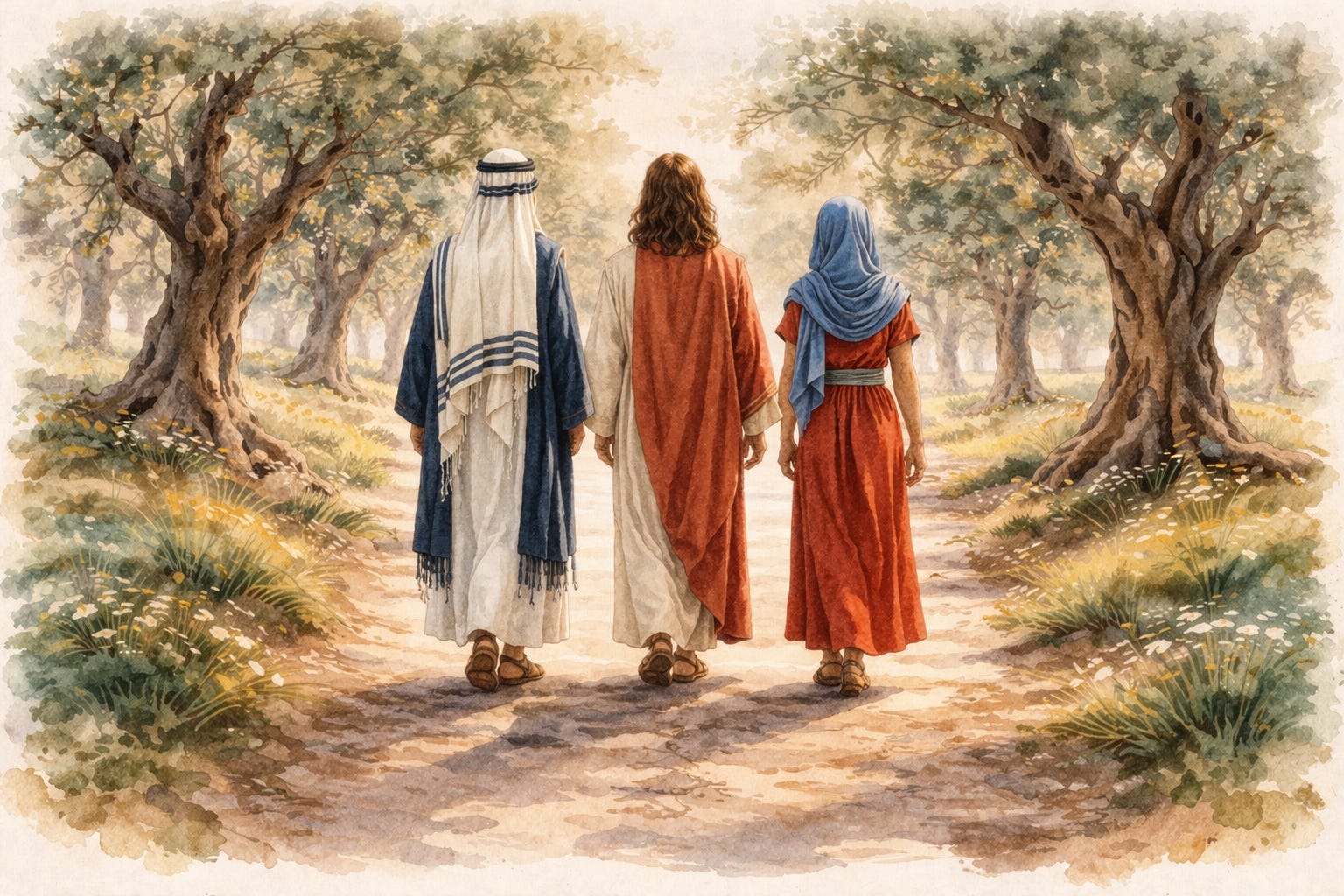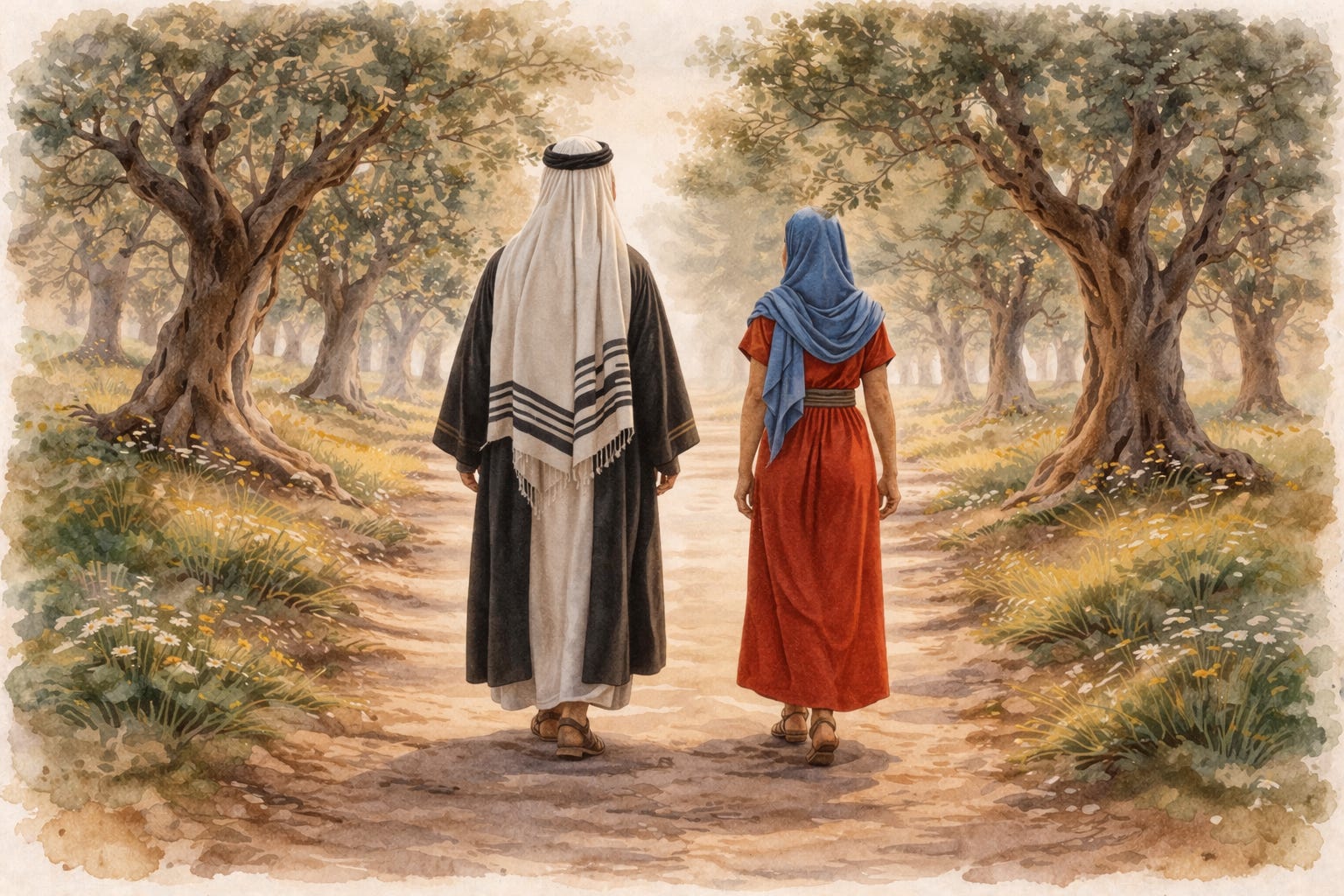
I read the Gospel of John again from the beginning, and this time, the story of Nicodemus held my attention.
Not just on its own, but in contrast.
Because I couldn’t help but place him beside the Samaritan woman.
On one hand, a Samaritan. An unnamed woman. An outsider.
On the other, Nicodemus. A Jew. A man. A Pharisee. A ruler.
She comes at noon.
He comes at night.
She has no theological training.
He is called “the teacher of Israel.”
And yet, what unfolds in these two encounters feels unexpectedly reversed.
The One Who Speaks and the One Who Doesn’t
After Jesus reveals Himself to the Samaritan woman, she goes.
She leaves her water jar.
She returns to her village.
She speaks:
“Come, see a man who told me everything I ever did. Could this be the Messiah?”
There is hesitation in her words. She is not certain.
And yet, she goes.
Her faith is not fully formed but it is already moving outward.
Notably, Jesus speaks to them both.
One, a religious leader.
The other, a Samaritan woman.
In both encounters, He crosses boundaries that should have held.
Religious boundaries.
Social boundaries.
Cultural boundaries.
This is the same Jesus who touches the unclean and makes them clean.
The One who does not become defiled, but who sanctifies.
Nicodemus is different.
He asks questions.
He listens.
He receives one of the most profound teachings in Scripture about being born again, about the Spirit, about the love of God.
And then… silence.
We are not told what he says next.
We are not told what he believes.
He disappears from the scene.
At least, it seems that way.
The Silence That Isn’t Empty
Nicodemus appears again later.
In John 7, he speaks. Not boldly, but carefully — questioning the Pharisees’ judgment of Jesus.
In John 19, he returns once more.
This time, he brings an extravagant amount of burial spices, about seventy-five pounds, and helps prepare Jesus’ body.
No public confession.
No recorded declaration of belief.
But something has shifted.
Not loudly.
Not immediately.
But unmistakably.
Two Movements of Faith
The Samaritan woman moves quickly.
From encounter to testimony.
From uncertainty to invitation.
Nicodemus moves slowly.
From curiosity to cautious defense to costly association.
One speaks before she fully understands.
The other acts, perhaps, before he ever fully articulates.
And I wonder if I have been too quick to privilege one over the other.
After sitting with both stories, I find myself arriving at an uncomfortable realization.
Reluctantly, it seems that I have been more like Nicodemus.
We often read the Gospels and instinctively identify with the needy, the sick, the outsider — the ones who come to Jesus aware of their lack.
But more often than we care to admit, we are closer to the Pharisee.
Formed.
Certain.
Rooted in a framework we have learned to trust.
And then confronted by a Jesus who does not quite fit within it.
Not rejecting Him, but unable, at least at first, to reconfigure everything around Him.
What Counts as a Response?
And perhaps that is why this unsettles me.
Because I realize that I tend to admire the Samaritan woman.
Her openness.
Her courage.
Her willingness to speak, even in uncertainty.
Faith like a mustard seed — tiny — but alive, visible, moving.
But if I am more like Nicodemus than I care to admit, then I have to ask:
What do I do with the kind of faith that does not speak right away?
The kind that wrestles quietly?
That moves in ways that are less visible, less immediate, less easily named?
Have I assumed that true faith must always look like quick clarity?
That it must always be expressed out loud, right away?
John does not seem to make that assumption.
Light Meets People Differently
Earlier in the Gospel, we are told:
Light has come into the world…
And then we are shown what happens when it does.
Nicodemus comes in the night — yet he is moving toward the light.
The Samaritan woman meets Jesus at noon — yet she begins in misunderstanding.
The categories begin to blur.
Insider and outsider.
Knowing and not knowing.
Clarity and confusion.
What matters is not where they begin — but how they respond.
The Question That Remains
Nicodemus’ story is left open.
We are not told, explicitly, “he believed.”
And perhaps that is intentional.
Because the question is not only about him.
It turns, quietly, toward us.
What do we do with what has been revealed?
Do we speak, even when we are unsure?
Do we move, even when we cannot yet explain?
Do we draw near, even when it costs us something?
Faith in Motion
The Samaritan woman reminds me that faith does not need to be complete to be shared.
Nicodemus reminds me that faith does not need to be loud to be real.
One bears witness with her words.
The other, perhaps, with his actions.
Both begin without full clarity.
Neither is presented as having everything resolved.
And maybe that is the point.
Faith, in the Gospel of John, is not a fixed state.
It is movement.
Sometimes immediate.
Sometimes slow.
Sometimes spoken.
Sometimes lived.
But always, in some way, moving toward the One who has been revealed.