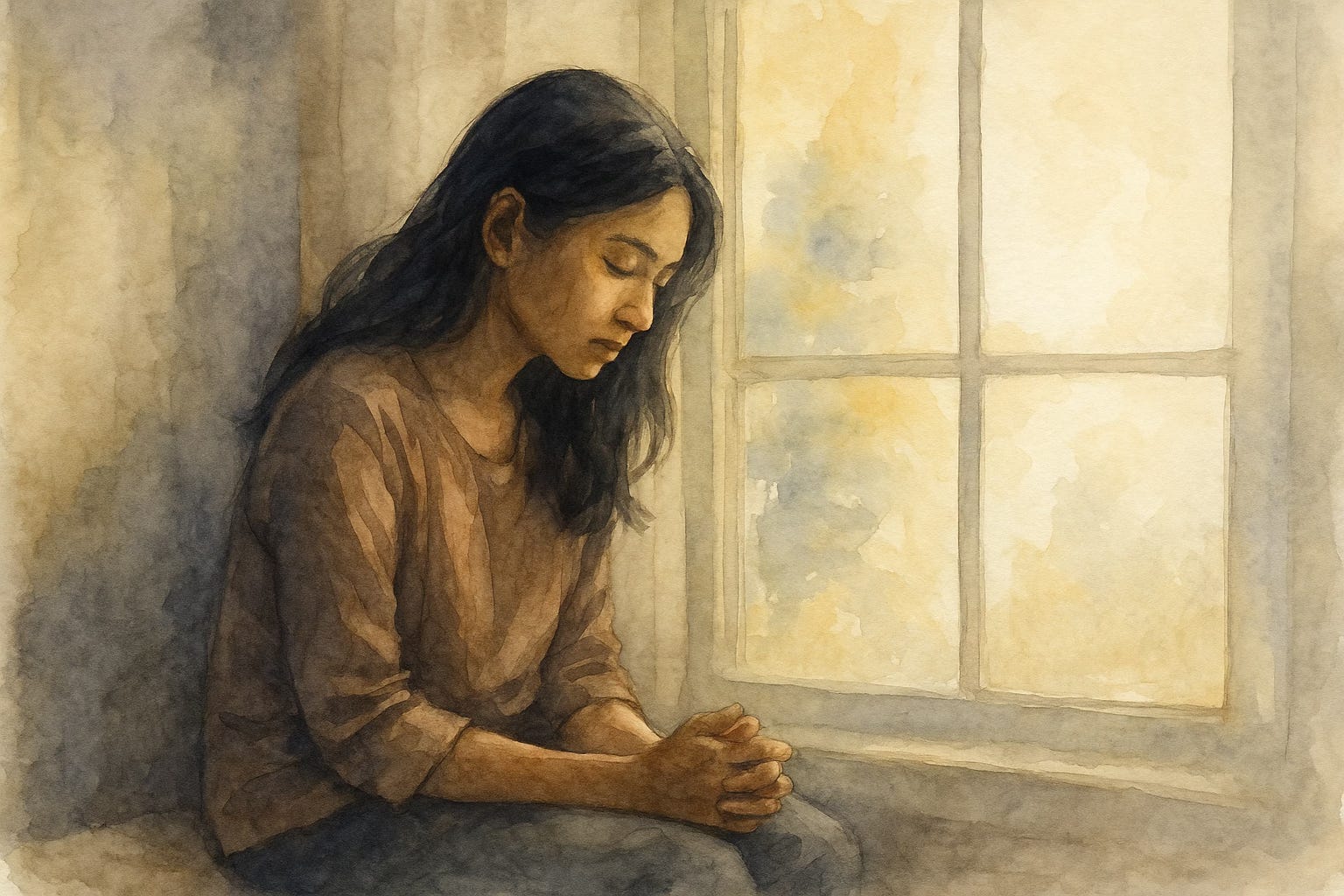
There’s a reason Pentecostal worship feels so alive. We expect God to move. We pray for healing, speak of victory, and rejoice when someone is set free. We know the Spirit as comforter, counselor, and power from on high.
But what happens when the healing doesn’t come? When the pattern doesn’t break? When the same family wounds seem to echo through generations, despite every prayer of deliverance?
For a movement so attuned to the Spirit’s immediacy, Pentecostalism can struggle to hold space for what remains unresolved. Our songs know the sound of triumph — but not always of tears.
The Pentecostal Imagination: Where Power Is Present
In most Pentecostal settings, the spiritual world is not a metaphor but a daily reality. Demons, blessings, angels, and curses shape how we understand health, relationships, and destiny. When life unravels, we instinctively ask what spiritual cause lies beneath the surface.
There’s beauty in this posture. It reflects a vivid awareness of God’s nearness and the conviction that no part of life is beyond His reach. But it can also become exhausting — because not all pain can be prayed away.
A worldview that sees every hardship as a spiritual problem leaves little room for the mystery of grace that doesn’t always fix what hurts. It leaves us uncertain what to do when the miracle delays, or doesn’t arrive at all.
The Missing Language of Lament
Other Christian traditions have kept the language of lament alive — the space to cry out, “How long, O Lord?” without rushing to a resolution. In the Psalms, lament is not faithlessness; it’s fidelity in its most honest form.
Pentecostals, however, often read tears as defeat. We prefer testimonies of victory to stories of waiting. Yet the Spirit who gives us tongues of fire is also the Spirit who groans with us (Romans 8:26). Those groans are not signs of unbelief — they are prayer in its purest form, when words fail and the heart still reaches toward God.
If our theology of power does not include the Spirit’s capacity to weep, then we have reduced the Spirit to an instrument of control rather than communion.
Generational Curses and the Problem of Explanation
The conversation about generational curses reveals this tension. Many Pentecostal believers sincerely seek to break unseen chains — patterns of addiction, illness, or conflict that seem to repeat in families. There’s pastoral empathy here; it’s an attempt to make sense of suffering that feels inherited.
Yet Scripture resists our need for simple causality.
In Exodus 20:5–6, God warns that sin affects generations — but immediately extends His mercy “to a thousand generations of those who love Him.”
In John 9:3, Jesus rejects the disciples’ assumption that the man’s blindness must be someone’s fault: “Neither this man nor his parents sinned.”
And in Galatians 3:13, Paul proclaims that Christ “became a curse for us,” transforming judgment into blessing.
The cross does not deny that sin has generational consequences. It proclaims that mercy has generational reach.
Grace, too, can be inherited.
When we fixate on tracing curses, we risk turning grace into a diagnostic tool and redemption into a formula. The deeper truth is that some suffering will never make sense this side of resurrection — and that’s precisely where faith lives.
The Cross and the Spirit: Power in Weakness
Pentecostals love the resurrection story — and rightly so. But resurrection power is cruciform power. The risen Christ still bears wounds.
A mature Pentecostal theology would not separate the Spirit’s fire from the Spirit’s tears. The same Spirit who raised Jesus from the dead also sustained Him through Gethsemane.
The Spirit’s presence does not always remove the thorn; sometimes it transfigures it (2 Corinthians 12:7–10).
That kind of power doesn’t silence lament; it sanctifies it. It allows us to say, “The curse stops here,” not because we have mastered spiritual technique, but because Christ’s grace is sufficient — even when the pain lingers.
Toward a Theology of Groaning
If Pentecostal communities could recover the language of lament, several things might follow:
Deliverance would include dignity. Instead of reducing people to spiritual problems, we would honor their suffering as sacred space where God is still at work.
Healing would be redefined. It would mean wholeness, not just the absence of pain.
Faith would be freed from performance. Tears would no longer be shameful but faithful — evidence that the Spirit intercedes even when our words collapse.
Generational blessing would be seen not as reward for spiritual perfection, but as the slow work of grace rewriting our stories through time.
When the Spirit Groans
Perhaps this is where Pentecostal faith must go next — not away from power, but toward cruciform power; not away from deliverance, but toward redemptive solidarity.
Maybe the Spirit’s greatest deliverance is not from suffering, but from the need to make suffering make sense.
Maybe the truest blessing we can pass on is not the end of pain, but the assurance that the Spirit never leaves us in it.
“The Spirit Himself intercedes for us with groans too deep for words.” Romans 8:26
Even here — in the groaning, in the waiting, in the places where the victory has not yet appeared — the Spirit abides.